
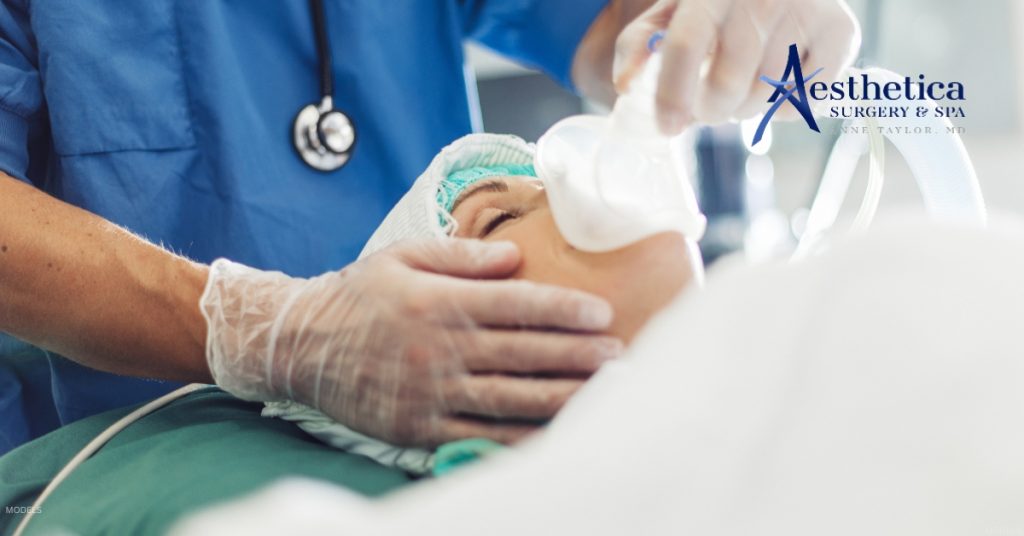
Twilight sedation vs general anesthesia depends on the type, size, and length of the cosmetic plastic surgery procedure, as well as patient safety and comfort. At Aesthetica Surgery & Spa in Columbus, Ohio, this is one of the most common questions I hear during patient consultations.
Procedures targeting smaller areas can often be performed safely and comfortably with twilight sedation and local anesthesia, while larger areas usually require general anesthesia. In this post, I’ll explain why certain cases are better suited for twilight sedation, why others are not, and how these decisions are made with your safety as the top priority.
WARNING:
This feature contains nudity. Please click OK to confirm you are at least 18 years of age and are not offended by such material.


What is Twilight Sedation in Plastic Surgery?
Twilight sedation is a combination of local anesthesia and calming medications that help patients remain relaxed and comfortable while breathing on their own. The goal is to reduce anxiety and discomfort during surgery without putting you fully to sleep.
In procedures where local anesthesia is injected, the initial numbing process can be uncomfortable. Medications used during twilight sedation, such as Valium, help take the edge off until the area is fully numb. This approach works best for smaller surgical areas where local anesthesia can be used safely and effectively.
Why Does Procedure Size Matter for Anesthesia Choice?
Procedure size matters for anesthesia choice because larger surgical areas require more local anesthetic than can be used safely, making general anesthesia the safer option. Local anesthetics such as lidocaine have safe dosage limits, and those limits are reached much more quickly when treating large areas of the body.
For procedures like blepharoplasty (eyelid surgery) that treat smaller areas, lidocaine levels stay well below toxic thresholds. However, for procedures that treat larger areas, such as an abdominal tummy tuck, the amount of local anesthesia required would exceed safe limits, making general anesthesia the safer option.
When Is General Anesthesia the Better Choice?
General anesthesia is typically used for larger procedures such as breast surgery and body contouring. While general anesthesia does carry some risks, those risks are very low and are carefully managed before and during surgery.
One of the main concerns with general anesthesia is the risk of blood clots forming in the legs. To reduce this risk, I use a standardized calculation called the Caprini Score to determine whether preventative blood thinners are appropriate. Although it may sound counterintuitive, this step is taken specifically to improve safety.
How Does Recovery Differ Between Twilight Sedation and General Anesthesia?
Patients often feel more clear-headed and recover more quickly after procedures performed with twilight sedation. Because there are no IV fluids and fewer medications involved, issues such as bloating, puffiness, and constipation are much less common.
With general anesthesia, it typically takes a few days to feel completely like yourself again. These temporary effects are expected and managed proactively, but they are another reason why twilight sedation is preferred whenever it’s safely possible.
Does Surgery Length Affect Anesthesia Selection?
Yes—procedures performed under local anesthesia and twilight sedation need to be short enough for patients to remain comfortable lying still for the duration of surgery.
Early in my career, facelifts took me much longer to perform, which meant general anesthesia was often necessary. With nearly 30 years of experience as a board-certified plastic surgeon, my operative time has decreased significantly. This allows me to safely perform many facelifts under twilight sedation instead. Experience matters—not just for results, but also for anesthesia choices.
Learn More
If you have additional questions about twilight vs general anesthesia for plastic surgery in Columbus, OH, I encourage you to request a consultation online or by calling us at (614) 569-2649.
Leave a Reply